
When you're a tech or ops lead in banking, you know "document automation" isn't just a buzzword. It's the practical solution to a painful problem: swapping out slow, paper-based routines for smart, fast technology. Instead of your team manually scanning forms and typing data, you can have specialized tools do it all automatically. They can lift customer information right off a document, run the necessary compliance checks in seconds, and assemble a personalized account package in minutes, not weeks.

A bank's first impression isn't a friendly handshake; it's the application process. And for today’s customers, a clunky, paper-choked sign-up is an instant dealbreaker. Anyone who has opened an account the old-fashioned way knows the nightmare all too well.
It always starts with a mountain of forms, each asking for the same information you just wrote down. After spending way too much time filling out endless fields—and maybe even driving to a branch—the real waiting begins. Your application disappears into a black hole, sitting in a queue for days or weeks while someone on your team manually keys it into one system, then another, checking and re-checking for typos. This drawn-out marathon just doesn't fly when people are used to getting everything else in their lives instantly.
This friction isn't just annoying for the customer; it's a massive risk for your bank. In a world where fintech startups can get a new user set up in minutes from their phone, traditional banks can't afford to make people wait weeks. The numbers are frankly staggering—a reported 89% of consumers will switch banks after just one bad onboarding experience. For banks stuck with manual methods, this can lead to losing up to 70% of new clients before they even get started.
This is where document automation changes the game, turning a major weakness into a competitive strength. It's not just about being convenient; it’s about survival.
By automatically scanning documents, getting rid of manual data entry, running compliance checks on the fly, and instantly creating custom account packages, banks can transform a frustrating, multi-week ordeal into a slick, minutes-long experience.
If you're looking to understand the specific tools that drive this change, you might find our guide on customer onboarding software helpful.
By bringing in a solid automation platform like EDocGen , you can completely overhaul your onboarding process. It's about more than just speed; it's about building a better business.
Ultimately, figuring out how document automation can speed up your customer onboarding is the first step toward building a bank that's ready for the future.
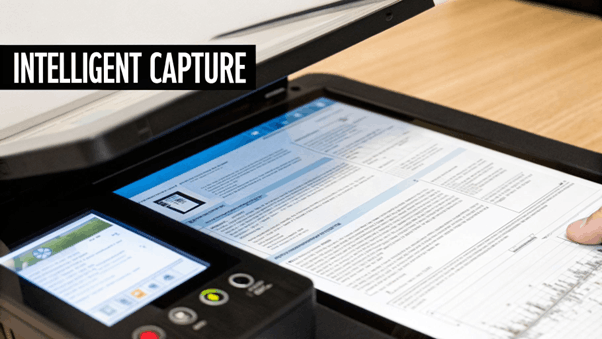
As someone with a technical or semi-technical background, you appreciate what’s really powering this new approach to onboarding. The magic that shrinks a week-long paper chase into a five-minute digital process isn't a single piece of tech. It’s a group of them, working together perfectly.
This is where a platform like EDocGen really shows its strength. While many systems can handle basic data, the system is built for the messy, complex data environments you deal with in large banks. It’s designed to take clean, structured data—like a JSON payload from a web form or an API call—and use it to populate sophisticated, rule-based document templates.
But where it really shines is in handling data that's far from perfect. Let’s say your team has a huge, unstructured Excel file with thousands of customer details. Instead of needing a developer to write a script to clean it all up, The platform’s AI can intelligently parse that spreadsheet. It identifies the data columns, figures out the relationships, and can generate thousands of personalized documents in one go.
This ability to work with everything from clean API calls to messy spreadsheets gives your business users the power to manage complex document workflows on their own, without constantly waiting on IT.
Of course, this technology also has a massive impact on keeping up with regulations, with modern systems for compliance process automation being a key part of the technical foundation that makes a truly smooth onboarding experience possible.
So what does this all look like in practice for a new customer? It’s a clean, straight line that replaces frustrating dead ends and waiting games with immediate action. The entire experience, from the moment a person clicks "Apply Now" to their account going live, becomes one single, connected workflow.
Let’s walk through what that modern onboarding journey actually feels like, step by step. It all starts with that first click, which sets off a chain of automated events designed to feel completely seamless for the user. They’re instantly directed to a secure portal, ready to go.
The first thing the customer does is upload their documents—a driver's license, a utility bill, a passport. In a manual world, this is where the first big bottleneck hits. Those documents would just sit in a digital queue, waiting for a human on your team to get to them. Here, technology takes over instantly.
Once the data is extracted, it isn't just dumped into the system. The automation platform immediately starts the validation process. This is where the system’s intelligence really comes into play, acting as a digital bouncer that works in milliseconds.
Using secure APIs , the platform talks to the bank's other key systems. The information it just extracted is instantly cross-referenced against:
This interconnected approach makes sure the data isn't just accurate but also fully compliant right from the very start.
The result is a single, verified source of truth for each new customer. Data silos are eliminated, and the risk of manual error from re-keying information across different systems completely disappears.
With a full and validated set of customer data, the system gets to its most critical job: creating the official account paperwork. This is where a specialized platform like EDocGen really separates itself from simpler tools. We’re not just talking about filling a few fields in a static PDF.
Based on the verified data, the specific product the customer chose (like a premium checking account), and their location, the platform’s engine dynamically generates a complete set of personalized documents. This might include a welcome letter, a detailed account agreement, and all the required regulatory disclosure forms. The platform’s powerful conditional logic automatically adapts the content—inserting a specific clause for a customer in California or adding different terms for a high-net-worth client.
The last step is getting the documents signed and filed away. The freshly generated, perfectly accurate document package is automatically routed to the customer through an integrated e-signature platform like DocuSign or Adobe Sign. They can review and sign everything on their phone or computer in a matter of minutes.
Once that final signature is on the line, the workflow wraps itself up. The signed documents are securely archived in the bank's system of record, a copy is sent to the customer for their files, and the right internal teams get an alert that the account is officially active. This is how smart banking automation turns a weeks-long headache into a smooth, efficient journey. The process isn't just faster—it's smarter, more secure, and delivers a far better customer experience from start to finish.
When you look at the document automation market, it’s a crowded space. You’ve got simple mail-merge plugins on one end and e-signature tools on the other. But for a large enterprise bank, these bits and pieces just don't cut it. You need a single, cohesive solution that can handle thorny integration challenges, strict security mandates, and massive scale.
This is where you see a clear separation between point solutions and a true platform like EDocGen.
Many tools present a false choice: either you contort your established workflows to fit their rigid system, or you sink a fortune into custom development to bridge the gaps. For a bank juggling legacy mainframes and modern cloud apps, a "rip-and-replace" strategy is a non-starter. You need a system that adapts to your world, not the other way around.
What really sets the system apart is its API-first architecture . Think of it as a universal adapter for your entire tech stack. While some platforms choke on anything but a perfectly clean API call, EDocGen was built to speak the messy language of enterprise data.
It doesn’t matter where your data lives. the system fluently ingests information from:
This flexibility is huge. It means the platform can plug directly into your existing infrastructure—whether it's Salesforce, a homegrown CRM, or even a mainframe that’s been running for decades—without forcing a massive IT project. It’s a pragmatic approach that delivers a much faster return on investment and keeps disruption to a minimum.
The journey is simple in concept: capture data, validate it, and generate the document.
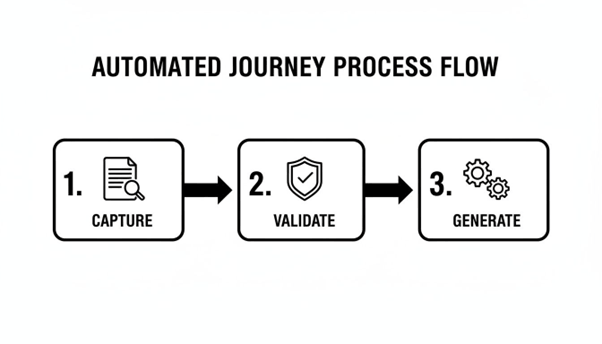
This flow is the engine of efficient onboarding, and it runs on clean, accessible data.
Here’s another big shift. In most banks, changing a single clause in a contract means filing an IT ticket and waiting. And waiting. That process is slow, expensive, and pulls your best developers off of high-value projects.
EDocGen completely flips that dynamic with its no-code template designer . It puts the power back into the hands of the people who actually own the documents: your business and operations teams.
Using an interface that feels familiar, your business teams can build incredibly complex templates on their own. They can add conditional logic (like, "if the customer is in Texas, add this specific clause"), perform calculations, and create tables that loop through data—all without writing a single line of code.
This self-service model is a game-changer. It dramatically cuts down the reliance on IT, letting you launch new products and update documents at the speed of the business, not the speed of the IT queue.
For any bank, security is simply non-negotiable. Period. Many cloud-only automation tools create a huge compliance headache by forcing sensitive customer data outside the bank’s secure perimeter. EDocGen was designed with this in mind, offering a flexible on-premise deployment option. All your data and processes can stay safely behind your own firewall.
On top of that, it comes with the security features you’d expect, including AES-256 encryption for all data, whether it's at rest or in transit. A central template repository also ensures tight governance, preventing anyone from using rogue or outdated documents and keeping your brand consistent.
When you put it all together—the integration, user empowerment, and security—you can see the real-world impact. One UAE bank, using this kind of approach, slashed its SME onboarding time from a full month down to just 15 minutes . That's a 98% reduction that led to a perfect 10/10 Net Promoter Score. EDocGen isn't just a document tool; it's a strategic platform for enterprise document automation built to deliver real business value.
For any IT leader or process owner, rolling out new tech is only half the battle. The real win comes from proving its value with hard numbers. When we talk about how banks use document automation to get customers onboarded faster, we have to move past fuzzy metrics like "time saved." You need to be tracking the specific business KPIs that show a clear, undeniable return on your investment.
Keeping an eye on these numbers does more than just justify a project. It gives you a constant feedback loop, showing you exactly where your automated onboarding is crushing it and where there’s still room to tweak and improve.
The true power of automation really shines when you focus on the right Key Performance Indicators (KPIs). These are the numbers that draw a straight line from your operational improvements to the company's bottom line. Here are the essential metrics every bank should have on its dashboard.
These first few metrics give you a great snapshot of your efficiency and customer happiness. But to see the full financial picture, you have to dig a bit deeper.
The real goal isn't just to be faster. It's about becoming more efficient, more accurate, and ultimately, more profitable. Tracking these KPIs is how you prove you've nailed all three.
Beyond the speed of the process, the most powerful arguments for automation always come down to cost savings and customer loyalty. These are the KPIs that make the business case impossible to ignore.
By tracking this full set of KPIs, you can build a bulletproof case that resonates with everyone from your operations team to the C-suite. A platform like EDocGen, which is built from the ground up to handle the demands of high-volume document generation , is designed to directly move the needle on every one of these metrics and prove the strategic value of your investment.

Speed is one thing, but a truly great onboarding experience is what makes a customer stick around for the long haul. When you automate the tedious parts of opening an account, you're doing more than just saving time. You’re setting the stage for a stronger, more positive customer relationship from the very first interaction.
Think about it from your customer’s perspective. What a relief to never enter the same piece of information twice. Or to start an application on a laptop during lunch and finish it on a phone later that night. These small conveniences send a huge message: you respect their time.
This isn't just about backend efficiency. Document automation delivers tangible benefits that customers actually feel. It swaps the usual anxiety of applications for a sense of control and confidence, turning a potential headache into a smooth, satisfying process.
The difference is clear in a few key features:
These wins are possible because automation is handling the repetitive work behind the scenes. It's what separates a process that's just fast from one that feels truly effortless.
When you automate the low-value administrative tasks, you free up your most valuable resource: your people. Relationship managers can stop chasing paperwork and start providing high-value, personalized advice, strengthening the client relationship from the very beginning.
At the end of the day, document automation isn't just about streamlining workflows; it's about building a more profitable and loyal customer base. The numbers speak for themselves. Automated onboarding can lead to 20-40% higher customer retention rates . In a market where a staggering 89% of consumers say they'd switch banks after a single poor onboarding experience, that’s a statistic no one can afford to ignore.
This is how modern banks are using document automation to their advantage. A superior experience, powered by a platform like EDocGen, directly connects a smart technical solution to the ultimate business goal: building a loyal, profitable customer base that stays with you.
How Does This Integrate with Our Legacy Core Banking System?
This is probably the most important question for you, and for good reason. The last thing you want is a solution that forces you to tear out your existing core banking system.
A modern, API-first platform like EDocGen doesn't work that way. Think of it as a smart layer that sits on top of your current infrastructure. It uses secure APIs to connect to your core system, CRM, or any other place your data lives.
It pulls the data it needs, creates the documents, and then pushes the signed paperwork right back into your system of record. The platform adapts to your world, not the other way around.
Can We Deploy This On-Premise for Security Reasons?
Absolutely. For most banks, sending sensitive customer data to a third-party cloud is a non-starter. Keeping it all behind your own firewall is non-negotiable.
Many SaaS-only tools just can't meet this requirement, creating huge compliance headaches. A true enterprise-grade platform must offer an on-premise deployment option. This gives your security team complete control, ensuring all data processing and document creation happens inside your secure perimeter. It’s the only way to satisfy the strictest regulatory and internal rules.
The choice between on-premise and cloud deployment is a huge deal. It’s a clear sign that a solution was built from the ground up with the security realities of enterprise banking in mind.
Is This Just Another Tool Our IT Team Has to Manage?
No, and this is a massive advantage for your team. The whole point is to empower your business teams, not pile more work onto IT.
With a no-code template designer, your own operations or compliance people can build and update even the most complex document templates themselves. They can add conditional rules, formulas, and specific formatting with a simple, visual interface.
This self-service approach shatters the dependence on developers for everyday changes. It frees up your IT team for bigger, more strategic projects and puts control in the hands of the people who actually own the business process. This is a core difference you'll find in platforms like EDocGen , especially when compared to tools that demand coding for every little template tweak.
Ready to see how a flexible, secure, and user-empowering platform can change your customer onboarding for good? Explore EDocGen and see how our enterprise-grade document automation is built to solve the unique challenges banks face. Learn more about EDocGen's solutions for banking .