Real Estate Document Automation
Posted by admin
Real estate transactions involve a lot of documents.

EDocGen automates the creation of presentations by merging XML data into PowerPoint templates — turning repetitive slide-deck creation into a scalable, automated workflow.
XML (Extensible Markup Language) stores and organizes data in a structured, hierarchical format, which makes it well suited to populating PowerPoint presentations in bulk or on demand. With the right tooling, converting XML into polished PPTX presentations is fast, repeatable, and requires no manual slide-building.
PowerPoint remains the standard for conveying information across real estate, financial services, and insurance:
EDocGen streamlines XML-to-PowerPoint conversion by automatically mapping structured XML data into PowerPoint templates for seamless presentation generation.
{ProjectName} or {QuarterlyRevenue} where dynamic content should appear.Business users and developers can reuse existing PPTX templates — no redesign required. Add tags as placeholders, and the system maps XML data into text, tables, images, slides, and charts automatically.
{Invoice_Number} and {Invoice_Date} are dynamic text fields — anything placed in curly braces is treated as a mapped value from the XML.

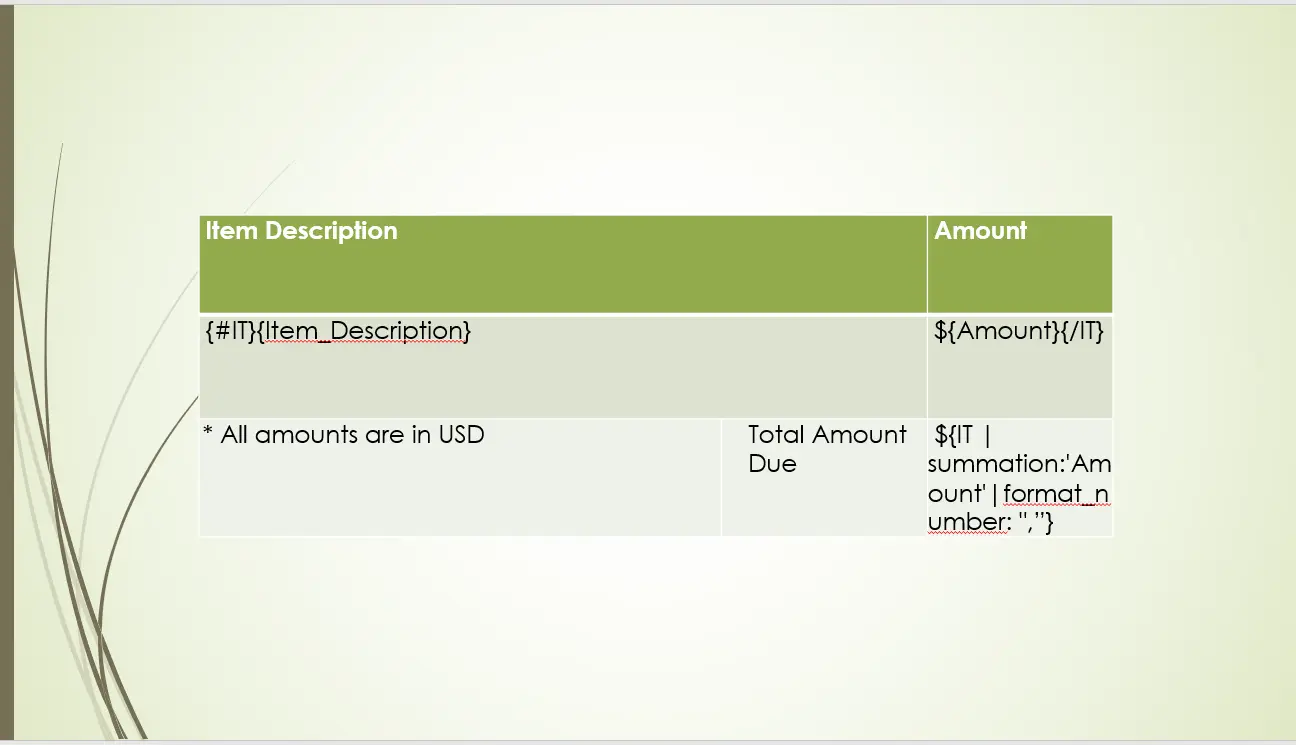
Tables start with {#tablename} and end with {/tablename}. For an invoice table, {#IT} opens the block and {/IT} closes it, with column tags like {Item_description} and {Amount} in between. EDocGen loops over the repeating XML nodes to populate one row per record — the same table tags can also generate a slide list.
The tag {%ImageField} populates images from URLs or uploaded image files referenced in the XML, with optional dimension controls to resize images to fit the slide layout.
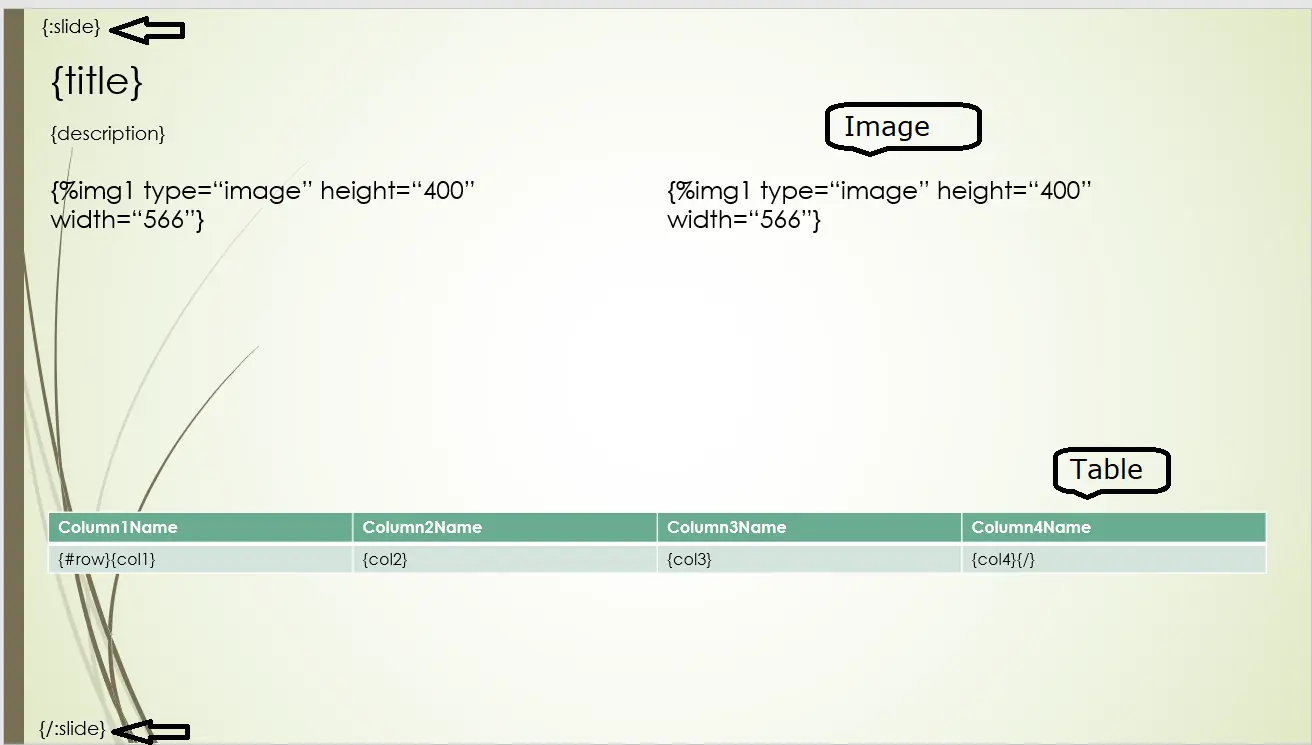
The tag {:slidesArray} creates a new slide for every record in a nested XML array. Image and table tags can be nested inside the slide tag, so each generated slide can carry its own table, image, and text content pulled from that record.
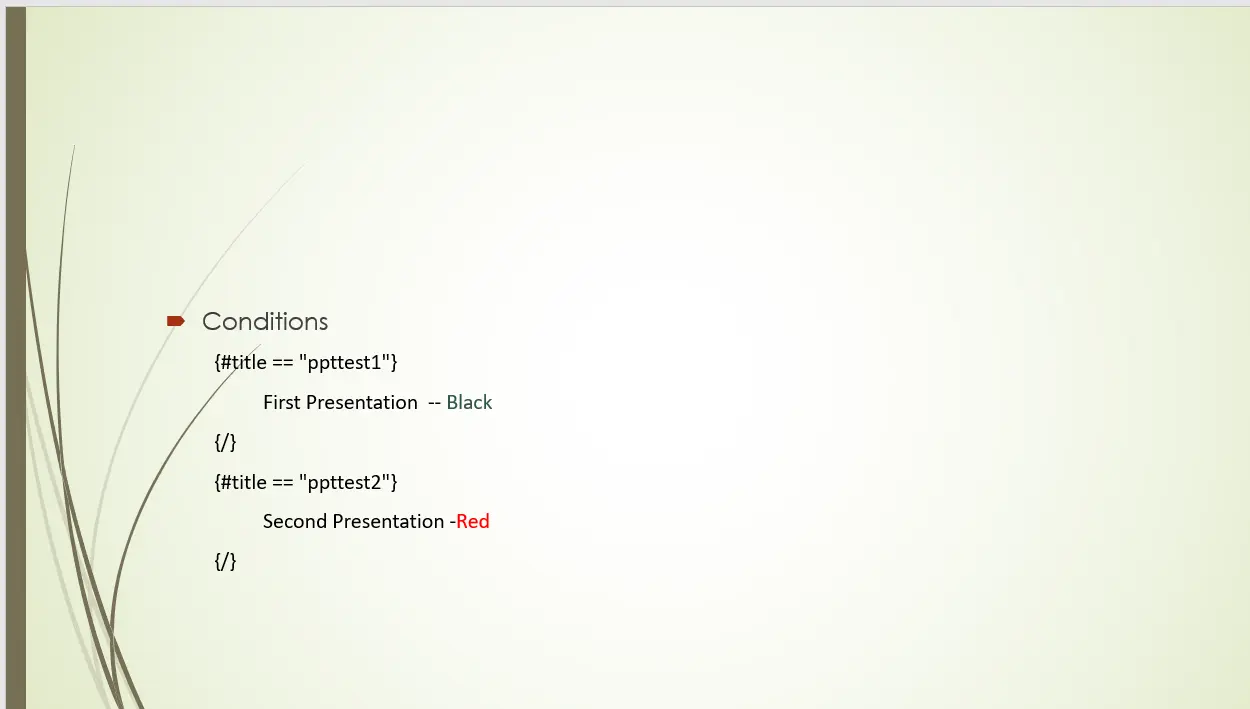
Conditional tags adjust content dynamically. For example, {#Lang == "English"} displays English content only when that condition is met in the XML — enabling a single master template to produce multi-lingual output.
Numeric XML data can drive bar, pie, and line charts directly inside generated slides, so every visual stays current with the source data. Typical uses include:
Auto-visualize revenue trends and expense breakdowns from XML feeds.
Generate KPI dashboards with up-to-date metrics on every run.
Build quarterly or monthly sales decks that reflect current performance data.
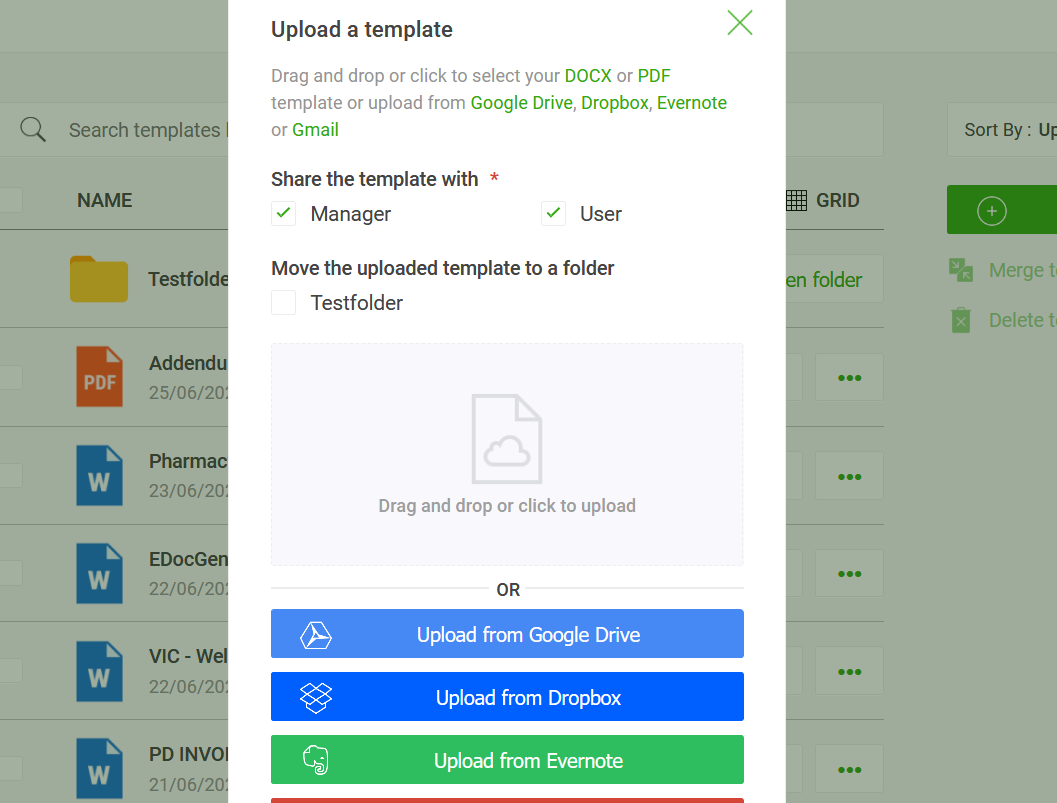
After adding tags to your template, upload it to the system:
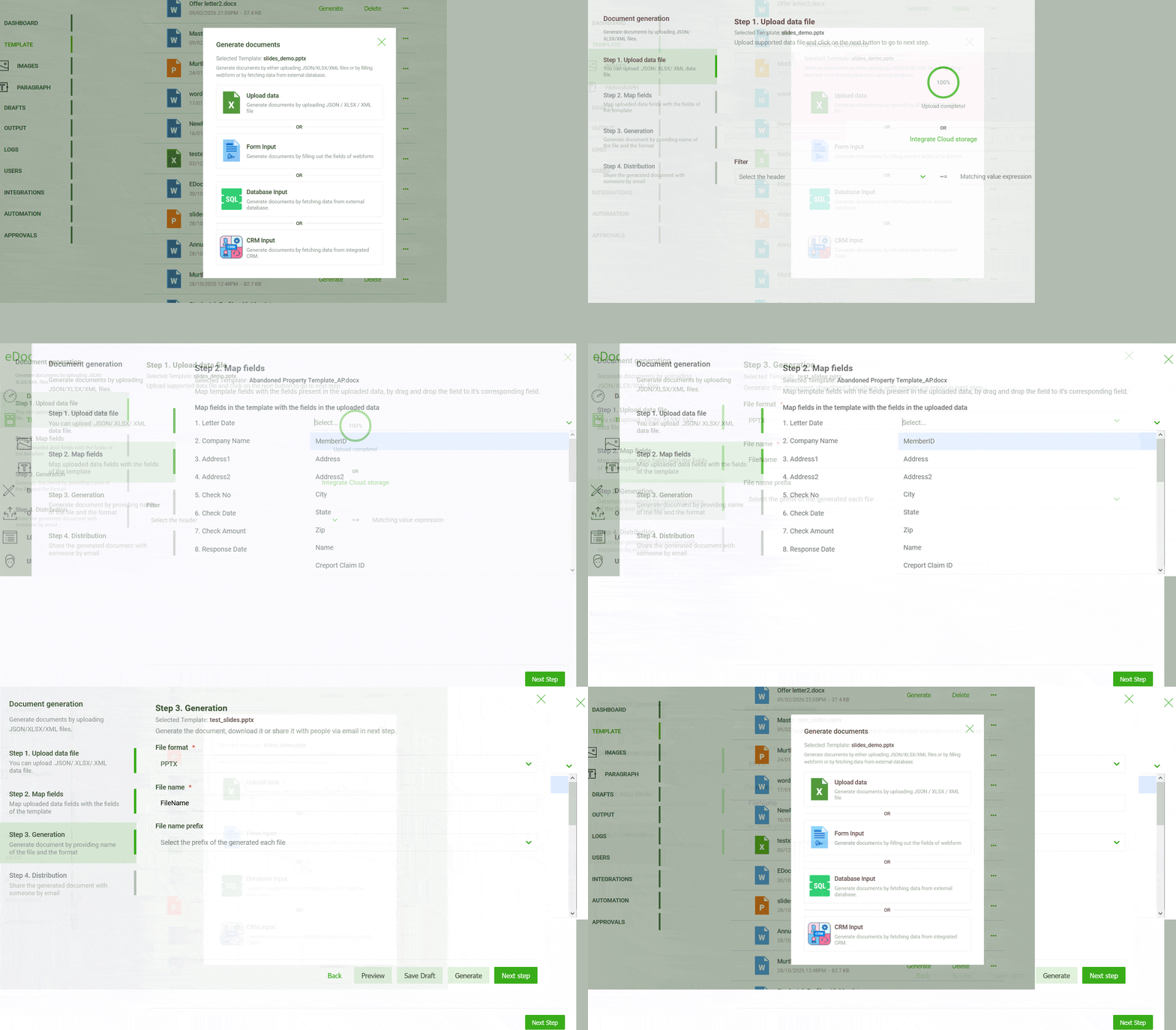
For bulk or on-demand generation, the EDocGen REST API offers a low-code/no-code way to automate PPTX creation:
The API also supports real-time synchronization — pulling fresh data from CRMs, databases, and third-party apps so every generated presentation reflects the latest figures without manual intervention.
Macros can automate XML-to-PPTX conversion but carry security risk (they execute code with access to local and connected systems) and are costly to maintain. Online converters are quick for one-off files but frequently lose formatting and struggle with large or complex XML. EDocGen avoids both trade-offs: it preserves template formatting exactly and scales to enterprise volumes without custom development.
It is the process of automatically populating a PowerPoint (PPTX) template with data from an XML file, so text, tables, images, and slides are generated without manual copy-pasting.
No. EDocGen accepts XML files as-is, including nested and multi-level XML structures, and maps them directly to the tags in your PPTX template.
Yes. EDocGen can generate thousands of personalized PPTX presentations from XML data in a single batch run, delivering results as individual files or a ZIP archive.
Yes. XML array data can populate repeating tables, and numeric fields can drive bar, pie, and line charts directly inside the generated slides.
No. Business users can tag an existing PPTX template and generate presentations through the UI with no code. Developers can also use the REST API for automated, on-demand generation.
Yes. The {:slidesArray} tag generates a new slide for each record in a nested XML array, so multi-record datasets automatically become multi-slide presentations.
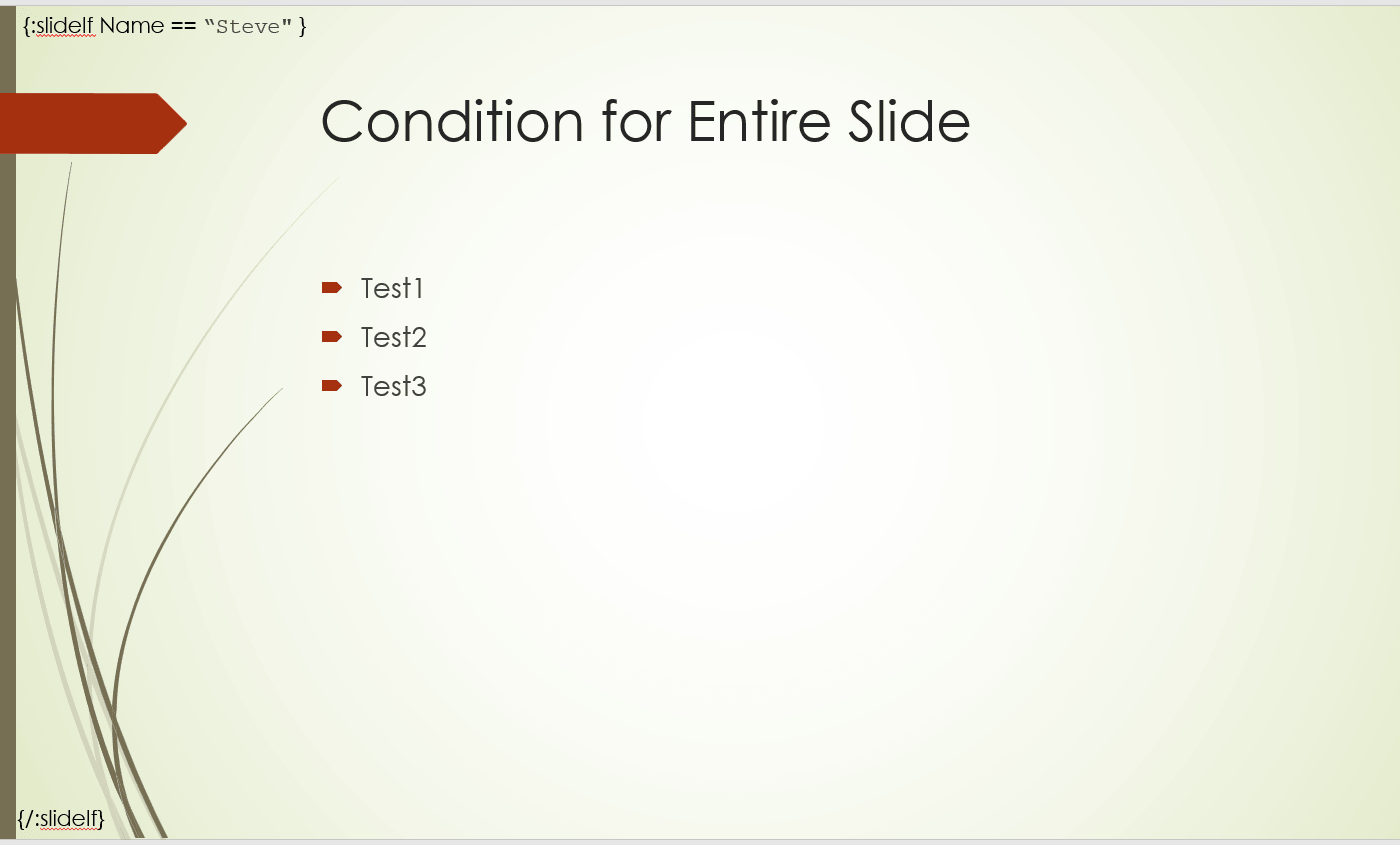
Yes. Conditional tags such as {#Lang == "English"} let a single template produce different content per slide based on values in the XML, including multi-lingual output.
Online converters often lose formatting and struggle with large files, and macros carry security risks and are hard to maintain. EDocGen preserves template formatting exactly, handles large and nested XML at scale, and requires no code to maintain.
Posted by admin
Real estate transactions involve a lot of documents.
Posted by admin
Seamless integration with Salesforce enables the incorporation of template-based automatic document generation into organizational processes.
Posted by admin
Almost all enterprise databases and applications allow you to export data in XML format.